A study of 100,000 tokens launched on Solana’s main DEXs in the first half of 2025 labeled 76,000 of them as rugs and counted at least $151 million taken from buyers. Solidus Labs looked at seven million Pump.fun launches and found 98.6% ended as pump-and-dumps by its definition. Those numbers are arguable at the edges. The pattern isn’t.
What follows is a field guide. Each scam gets a mechanism, a real case with numbers, and the tell that would have caught it. We’ve left out the ones we couldn’t document.
1. The dev dump, or soft rug
The simplest version. Insiders hold a large share of supply from launch and sell it into whoever buys. Nothing about the token is technically broken. The mint is revoked, the LP may even be burned. The problem is who owns it.
HAWK is the textbook case. The Hailey Welch token launched on December 4, 2024 with 100% of supply minted by the deployer: 3% went to the liquidity pool, 80% to the team, and 17% to 285 presale wallets, all unlocked on day one. According to Bubblemaps, 155 of those wallets sold into the launch and realized about $3.3 million. A 15% trading tax took another million in minutes. Market cap went from roughly $500 million to $25 million. Burwick Law filed suit in the Eastern District of New York two weeks later; Welch herself isn’t a defendant.
Tell: holder concentration and unlocked team allocations. The automated checks were green. The holders tab was red.
2. The liquidity pull, or hard rug
Here the creator keeps the LP tokens of the trading pool. Once enough buyers have put SOL in, they withdraw the whole pool. The token still exists; it just has nothing to trade against. The H1 2025 study counted more than 15,000 of these. Solidus found the median Raydium rug took about $2,800 and the biggest about $1.9 million, which tells you something: this is a volume business, not a heist.
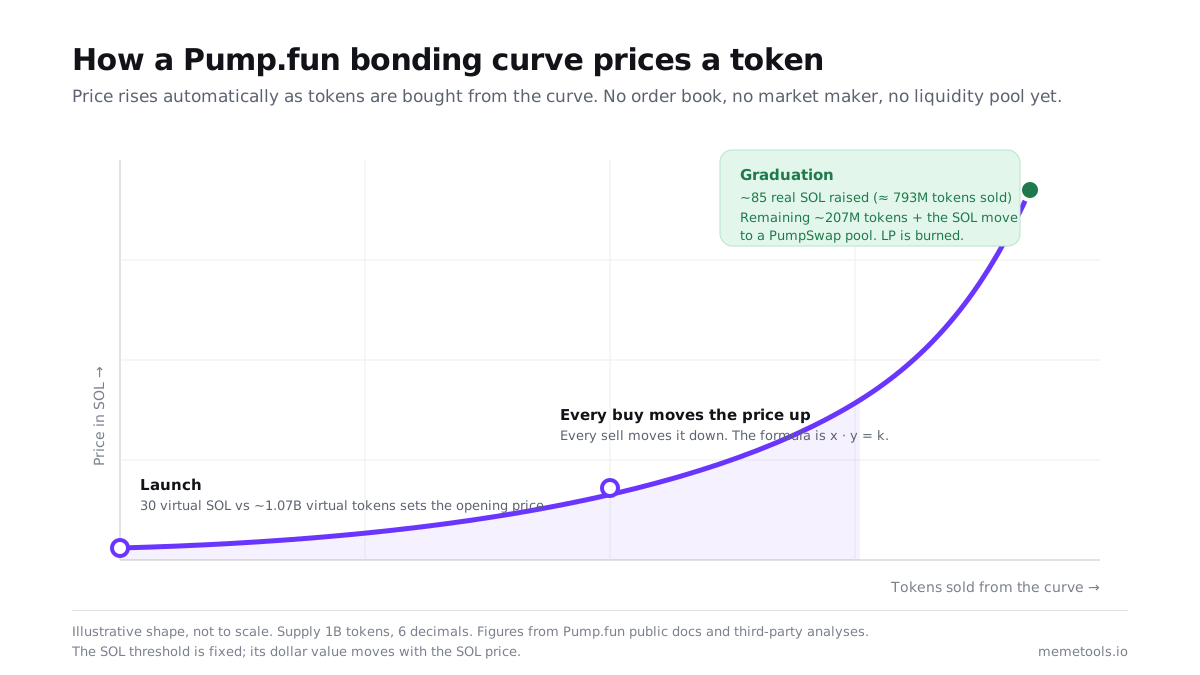
Tell: RugCheck’s “Large Amount of LP Unlocked” flag, or an LP lock that expires next week. Pump.fun tokens on the curve can’t be hard-rugged, and PumpSwap burns LP at graduation. Tokens launched directly on a DEX are where this lives.
3. The honeypot
You can buy. You can’t sell. The old way to do this on Solana was freeze authority: the creator freezes your token account after you buy. The study found 461 of those in six months. The new way is Token-2022 extensions. A transfer hook can reject any transfer that isn’t to the creator. A permanent delegate can move or burn your tokens without asking. Neither can be revoked by you, and both are legitimate features for other kinds of tokens, which is why wallets don’t just block them.
Tell: freeze authority enabled, or any Token-2022 extension on a memecoin. RugCheck shows these as “Permanent Control Enabled” and “Fee config enabled”. Solscan lists extensions on the token page.
4. The bundled launch
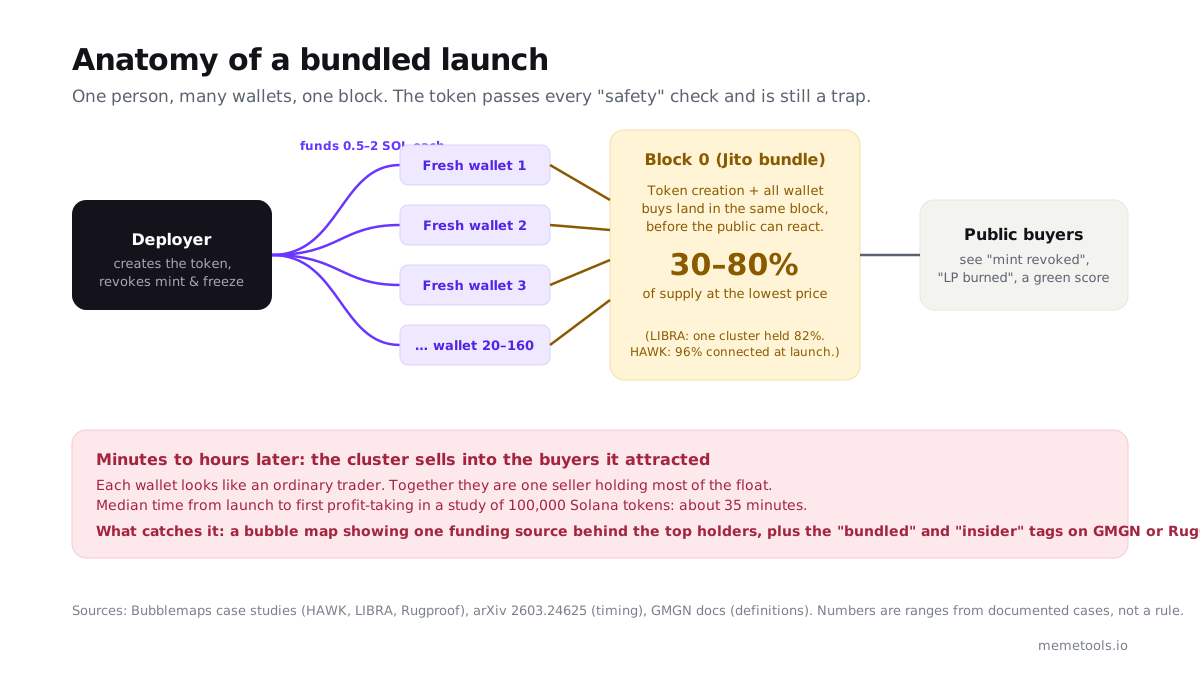
This is the one that defeats most people’s checklist, because the token passes it. The deployer funds a batch of fresh wallets, often with similar amounts of SOL from the same exchange, and uses a Jito bundle to land the token creation and all of those wallets’ buys in the same block. By the time the public sees the token, 30 to 80% of the supply has already been bought at the lowest possible price.
LIBRA, the token Argentina’s president posted about in February 2025, had a single cluster holding 82% of supply from the start. HAWK’s holders were 96% connected at launch. In July 2025 Bubblemaps flagged a launchpad token where the creator wallet had funded 162 wallets that bought half the supply. In December 2025 it found 23 deployer-linked wallets, funded through Bitget and Binance with similar amounts and no prior history, holding about 40% of a token called AVA that later fell 96%.
Tell: a bubble map that looks like a solar system, one source funding the top holders, and the bundled and suspected-insider tags on GMGN. The H1 2025 study found the median time from launch to first insider profit-taking was about 35 minutes, and 95% of rug activity happened on day one. If you weren’t in the block, you were late.
5. Snipers and sandwiches
Snipers aren’t scammers in the strict sense. They’re bots that buy every new launch in its first blocks and sell within minutes. A 2025 analysis found more than half of Pump.fun tokens sniped at creation, mostly by spray-and-pray bots that lose on most and win big on a few. The narrower, nastier slice is deployer-funded snipers: the creator’s own bots, profitable 87% of the time, 85% of them out within five minutes. Those are a bundle by another name.
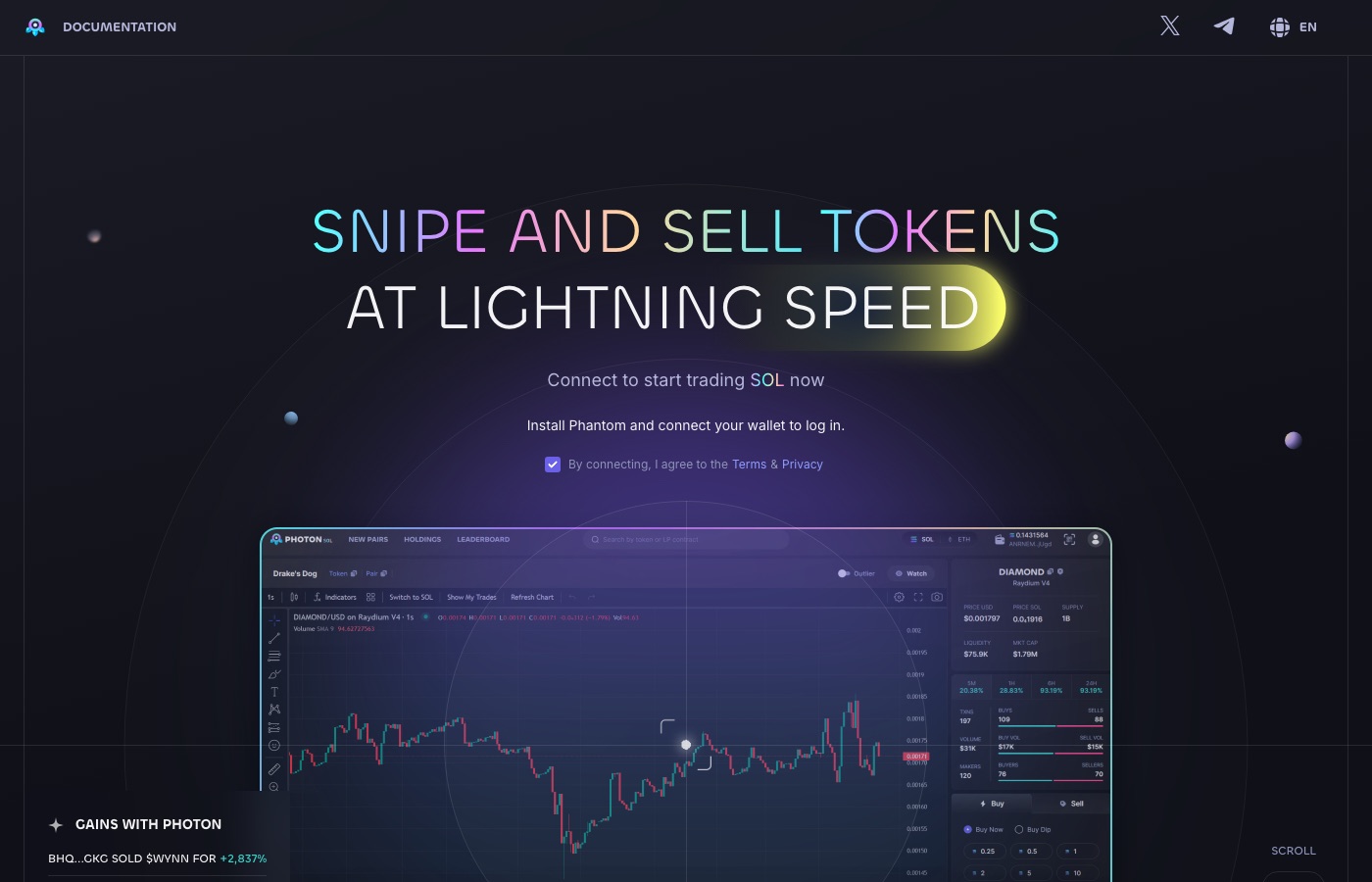
Sandwich bots are a tax on everyone. Bitquery counted 6.85 million sandwich attacks on Solana over roughly a year to October 2026, grossing about $29.7 million from 2.15 million victim wallets, 96% of them on Pump.fun tokens. Every trading terminal sells “MEV protection” for this reason. It works some of the time.
Tell: for snipers, GMGN’s sniper tag selling into your buy. For sandwiches, a fill noticeably worse than the quote. The defense is slippage limits and a terminal’s secure-send mode, which routes around public mempools at the cost of speed.
6. Fake volume
Trending lists run on volume, so volume gets manufactured. Bitquery documented one operator in April 2026 who seeded about 200 bots with half a SOL each and generated more than $500,000 of fake volume on a token in twelve hours. The widely repeated claim that 41% of Solana memecoin volume is wash trading comes from a 2024 post with thin methodology, so take the exact number lightly. The practice is real.
Tell: thousands of tiny buys and almost no sells, volume far above liquidity, holder count flat while the chart climbs.
7. The influencer launch
Sometimes the bundle has a famous face on it. LIBRA peaked at a market cap around $4.5 billion within hours of President Milei’s post, fell 89% in three hours, and finished down more than 96%. Chainalysis traced about $99 million leaving the pools through eight wallets; other firms put it between $87 and $107 million. Nansen estimated trader losses around $251 million. TRM found one address receiving a million LIBRA twenty minutes before the post went up. The US class action was dismissed for jurisdiction and an Argentine court dismissed the criminal case this October. Nobody is going to prison and nobody is getting their money back.
A cluster is a lead to investigate, not proof. But when the cluster is also the deployer and also the biggest seller, you don’t need more proof.
A rule we use when reading bubble maps
Tell: everything above, plus a launch timed to a post. The celebrity is the marketing budget. The structure is identical to a bundle run by nobody.
8. Drainers: when the scam is the website, not the token
All of the above take your money by selling you a bad token. Drainers take it by getting you to sign a transaction that empties your wallet. They are sold as a service: Mandiant documented the CLINKSINK drainer in early 2024 with at least 35 affiliates running fake airdrops impersonating Phantom, DappRadar and BONK, splitting the take 80/20 with the kit’s author, and at least $900,000 stolen.
The modern versions are sneakier. A System Program “assign” instruction can hand ownership of your account to the attacker’s program while showing no balance change in the preview, which is how a wave of drains in December 2025 that SlowMist put above $3 million worked. Durable nonces let an attacker get you to sign something harmless-looking today and execute it later, after the simulation is gone. Fake “revoke”, “verify your wallet” and “claim rewards” pages exist for every popular token.
Tell: any site that wants a signature before showing you what it does. Phantom’s and Solflare’s simulations catch most, not all. A warning that reads “This dApp could be malicious” means stop. A page you reached from a DM, a reply, or a sponsored search result means stop before the warning.
9. Address poisoning
The attacker generates an address whose first and last characters match one you use, sends you dust from it, and waits for you to copy it from your transaction history instead of from your contacts. Bitquery found about 4.5 million Solana wallets targeted over the eleven months to October 2026. Confirmed losses in a 3 million wallet subset were about $940,000, which is a floor. One victim in November 2025 sent a $10 test to the fake address, saw it “arrive”, and followed it with $30,750.
Tell: an address in your history that you don’t remember paying, with a tiny incoming amount. Never copy from history. Check the middle of the address, not the ends.
10. The bot that holds your keys
Telegram trading bots generate a wallet for you and keep the key. That’s convenient and it means a bug in the bot is a bug in your wallet. Banana Gun lost about $3 million across eleven users in September 2024 through a flaw in how it handled Telegram messages, and refunded them. Maestro and Unibot both had contract exploits in 2023. Nova had an unconfirmed $500,000-plus drain report in September 2025. None of these were phishing. They were the product.
Tell: not a tell so much as a rule. Treat any generated wallet as a hot wallet holding one session’s money. Export the key if the bot allows it, and prefer bots that do.
What actually protects you
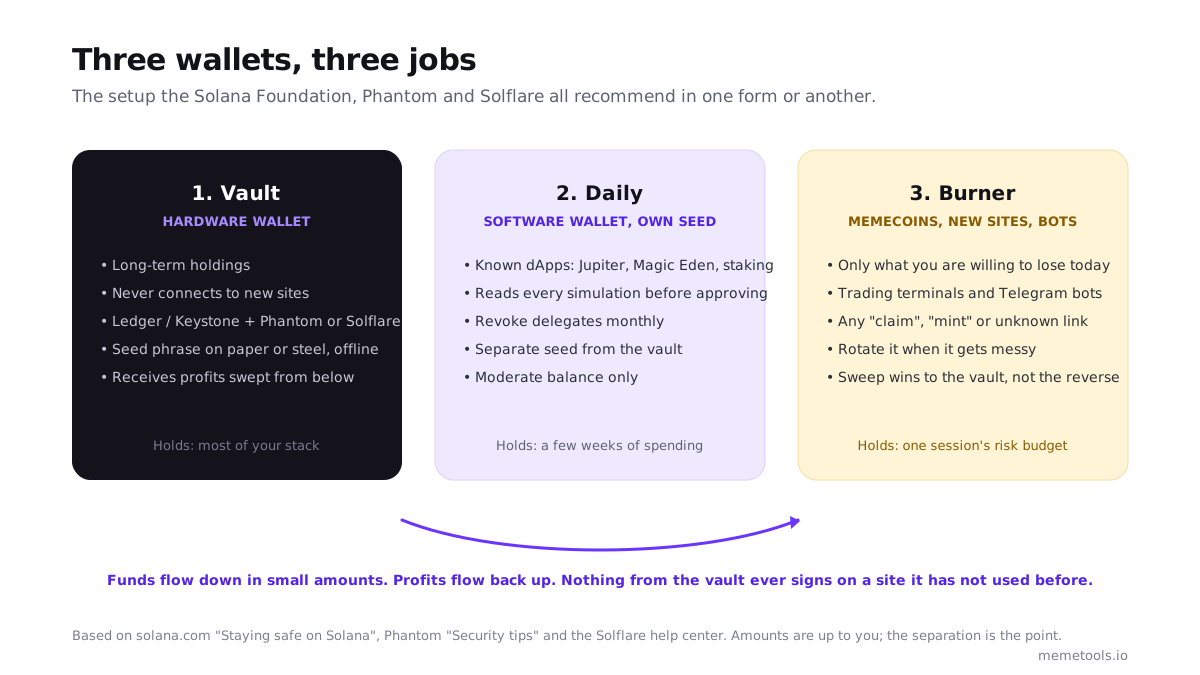
- Three wallets: a hardware wallet that never touches new sites, a daily wallet for known apps, and a burner for memecoins and bots with only what you can lose today.
- Read the holder map before the chart. Bubblemaps and GMGN’s tags catch bundles that every other check misses.
- Treat RugCheck as a filter, not a verdict. A danger flag is a no. A clean report is a maybe.
- Never sign from a link in a DM, reply or ad. The official site, typed or bookmarked, every time.
- Read every wallet warning. Phantom’s blocklist is open source and updates within fifteen minutes of a report; it only helps if you don’t click through it.
- Copy addresses from contacts, never from history.
- Revoke token delegations monthly. Disconnecting a dApp doesn’t remove them.
None of this is sophisticated. That’s the point. The same ten shapes, run at industrial scale against people who are in a hurry. Slow down for ten minutes and most of them can’t touch you.